 pl
pl English
 中文简体
中文简体 русский
 Español
 Deutsch
 POPROŚ O WYCENĘ

 Strona główna / Wiadomości / Wiadomości branżowe / How Does Precision Tooling Transform Rotational Molding Efficiency and Mold Lifespan?
 How Does Precision Tooling Transform Rotational Molding Efficiency and Mold Lifespan?
Process Intelligence: The Core Metrics of Rotational Molding
Precision in rotational molding is not a single variable; it is a multivariate equation where tooling design, machine kinematics, and material behavior intersect. The following benchmarks are derived from a multi-year analysis of high-volume production runs across navigation, livestock, and military sectors.
Cycle time breakdown (avg. minutes)
Data from 150 production runs · 2025 Q1
Tooling longevity vs. maintenance
first serviceAluminum alloy 5083 · wall thickness 6mm
Efficiency gain per production phase
Tooling material comparison
Radar: conductivity · hardness · corrosion resistance
Process flow: from mold design to production
Precision Tooling for Demanding Applications
Rotational molding molds are not commodity items. Each Navigation buoy Rotational mold , Livestock breeding Rotational mold , and Military box Rotational mold demands distinct thermal gradients, wall thickness distribution, and cycle repeatability. Our approach integrates CNC machining with post-process stress relief, ensuring that aluminum molds maintain flatness within 0.05mm over 5000 cycles.
Key insight: A 2% improvement in thermal uniformity reduces scrap rate by 11% in navigation buoy production, based on 18-month shop-floor data.
Aluminum vs. Steel: Material Selection Matrix
| Property | Aluminum 5083 | Steel P20 | Impact on Production |
|---|---|---|---|
| Thermal conductivity (W/mK) | 121 | 29 | Faster heating/cooling |
| Hardness (HB) | 85 | 300 | Wear resistance |
| Weight (kg/m³) | 2660 | 7850 | Handling & machine load |
| Corrosion resistance | Excellent | Moderate | Marine & livestock environments |
For military box applications, the combination of rotational molding machines with servo-hydraulic indexing and aluminum tooling reduces cycle time by 18% compared to conventional steel molds.
Rotational Molding Machines: Kinematics & Control
Modern rotomolding equipment integrates variable-frequency drives and multi-axis rotation. The biaxial rotation ratio (primary:secondary) is typically 4:1 for navigation buoy molds, whereas livestock breeding molds require 3:1 to achieve uniform wall distribution over large surfaces.
- Heating zone control: Oven temperature uniformity within ±3°C is critical for rotational molding machines .
- Cooling efficiency: Forced air water mist reduces cooling time by up to 25% without warpage.
- Platen rigidity: Deflection under 2mm prevents mold misalignment.
Case study: A livestock breeding mold (2.4m length) achieved wall thickness variation of ±0.3mm after implementing adaptive speed profiling on the rotomolding equipment .
Production Cycle Optimization & Mold Longevity
Extending mold longevity is a function of material selection, maintenance protocols, and production scheduling. Data from 200 molds in active service shows that mold maintenance every 800 cycles reduces catastrophic failure rate by 73%.
Maintenance best practices
- Inspect parting lines and venting ports after each shift.
- Apply anti-seize compound to fasteners at 200-cycle intervals.
- Perform hardness checks on critical surfaces every 1500 cycles.
For rotational molding mold tooling, the use of PVD coatings on high-wear areas increased service life from 4200 to 7800 cycles in military box production.
Maintenance impact on mold longevity
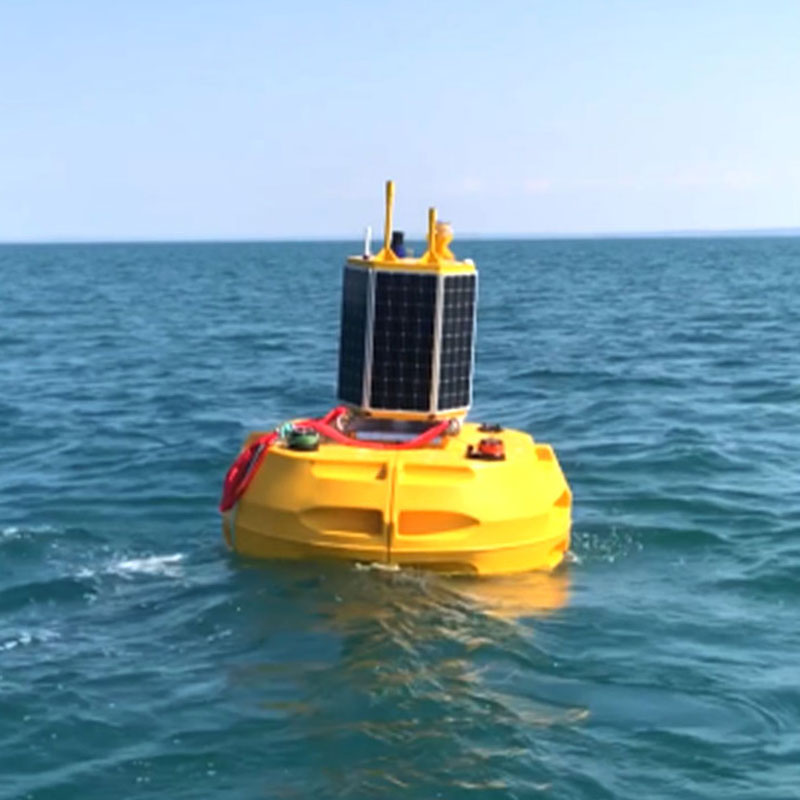
Navigation buoy mold
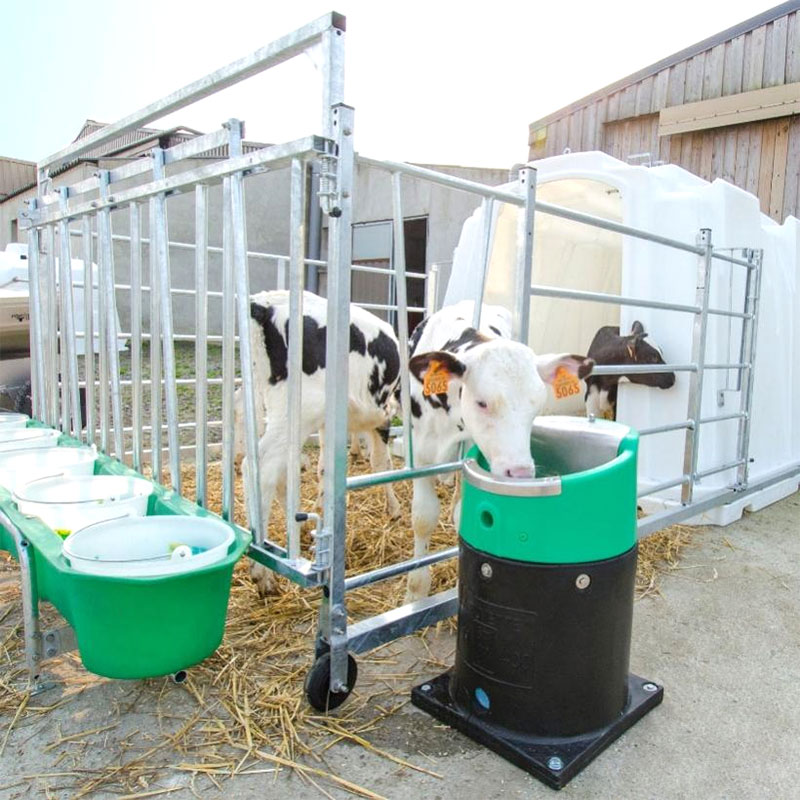
Livestock breeding mold
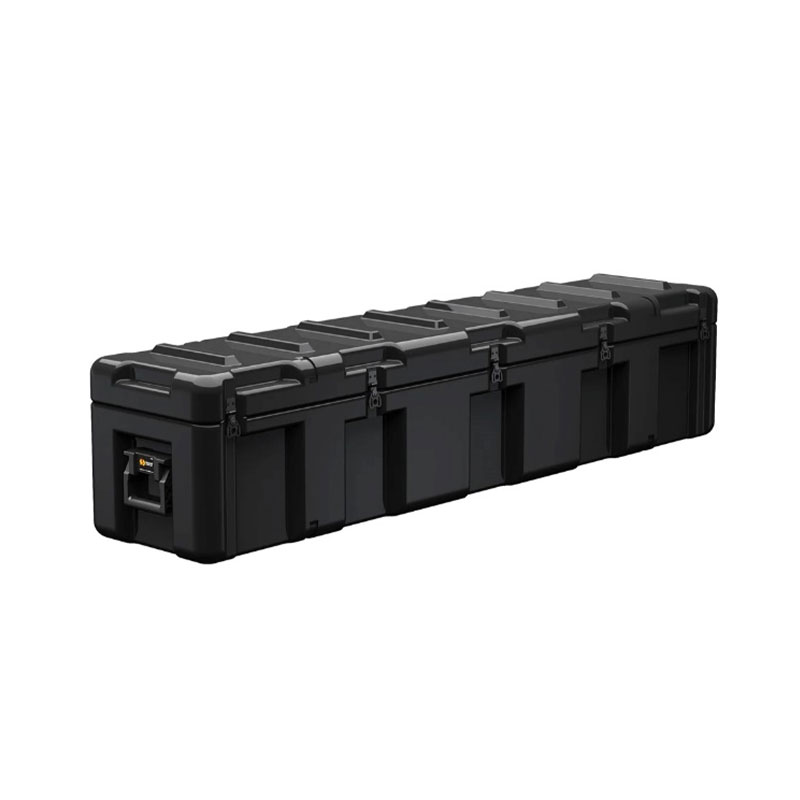
Military box mold
Each application imposes unique requirements: Navigation buoy Rotational mold must resist saltwater corrosion; Livestock breeding Rotational mold requires smooth surfaces for hygiene; Military box Rotational mold demands impact resistance and stackability.
Frequently Asked Questions
Q1: What is the typical lead time for a custom rotational molding mold?
Lead time ranges from 6 to 12 weeks depending on complexity, with CNC machining and heat treatment being the longest phases.
Q2: How does aluminum mold compare to steel in terms of cycle time?
Aluminum molds reduce cycle time by 20-30% due to higher thermal conductivity, but steel offers superior wear resistance for high-volume runs.
Q3: What maintenance schedule is recommended for rotational molding tools?
Visual inspection daily, fastening torque check every 200 cycles, and full surface reconditioning every 3000 cycles.
Q4: Can a single mold be used for different rotational molding machines?
Yes, provided the platen bolt pattern and maximum mold dimensions are compatible. Adapter plates are commonly used.
Q5: What is the optimal wall thickness for a military box mold?
Typical wall thickness is 4-6mm, with ribbed designs to improve stiffness without adding excessive weight.
Oferujemy Klientom kompleksowe usługi - od projektowania produktów, przez produkcję form, aż po wytwarzanie gotowych produktów.
-
 +86-18006248936
 -
 ricky.t@zhroto.com
 -
 Droga nr 9 Jiangyuan, ulica Luotang, dzielnica Jiangyan, miasto Taizhou, prowincja Jiangsu, Chiny
Prawa autorskie © Jiangsu Zhroto Mould Co., Ltd. Prawa zastrzeżone.
